
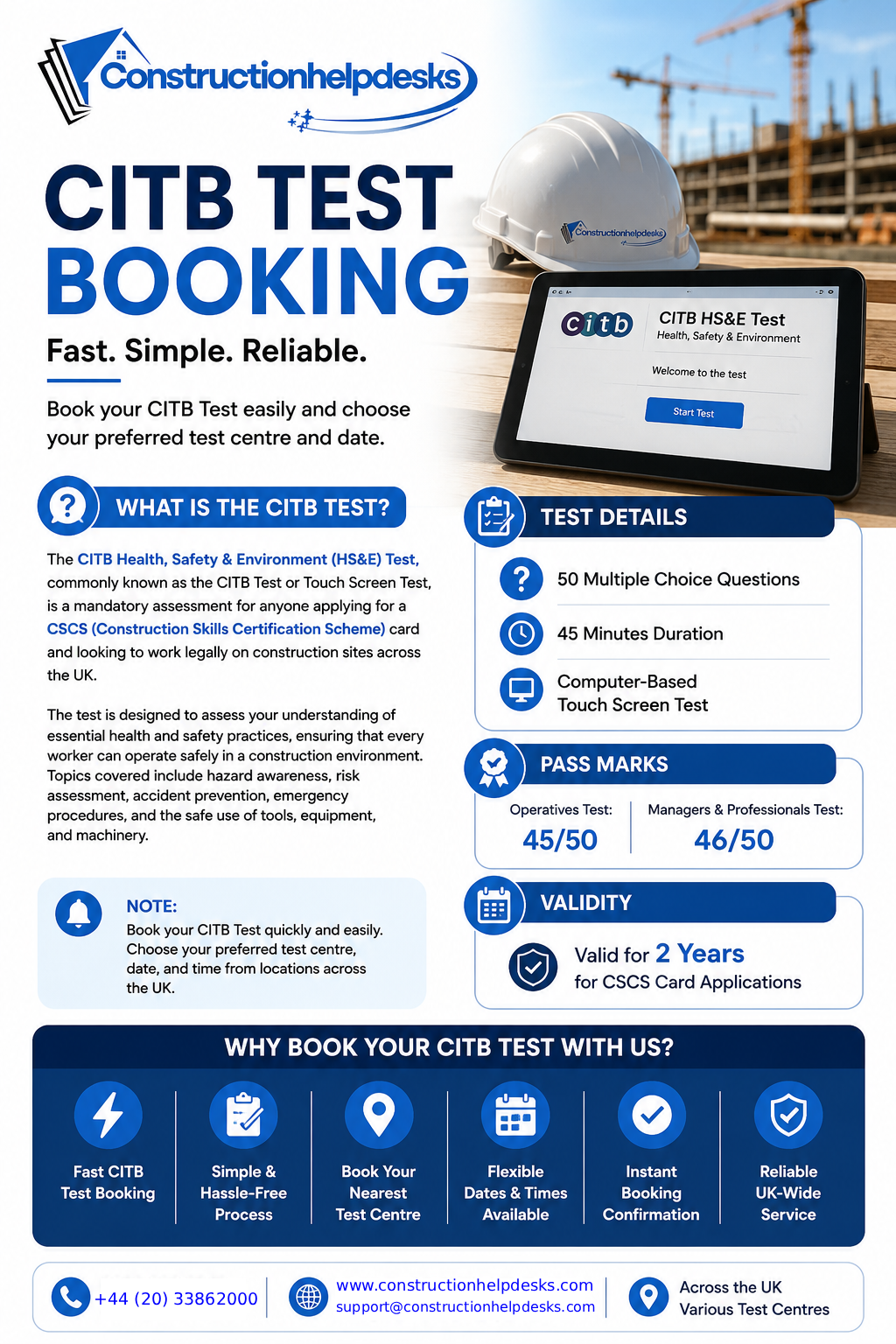
The Construction Industry Training Board (CITB) Health, Safety and Environment (HS&E) Test is one of the most important requirements for individuals seeking employment within the UK construction industry. Whether you are a labourer, skilled worker, supervisor, manager, or professional working on construction sites, passing the CITB Test is often a mandatory step towards obtaining a Construction Skills Certification Scheme (CSCS) card.
The UK construction industry places a strong emphasis on workplace safety, and the CITB Test has been designed to ensure that workers possess the necessary knowledge and understanding of health, safety, and environmental practices. By successfully completing the test, candidates demonstrate that they can work safely, identify hazards, and contribute to maintaining a secure working environment.
What is the CITB Test?
The CITB Health, Safety and Environment Test is a computer-based examination that assesses a candidate's knowledge of health and safety principles relevant to the construction industry. The test is commonly referred to as the CITB Test or Touch Screen Test because it is completed using a touchscreen computer at an approved test centre.
The primary purpose of the test is to ensure that workers understand the importance of health and safety regulations and can apply this knowledge on construction sites. It helps reduce workplace accidents, injuries, and hazards by ensuring that everyone entering a construction environment has a minimum level of safety awareness.
The CITB Test is a key requirement when applying for a CSCS card, which is widely recognised across the UK construction industry as proof of competence and qualifications.
Why is the CITB Test Important?
Construction sites can be hazardous environments involving heavy machinery, working at height, electrical systems, moving vehicles, and various tools and equipment. Without proper safety awareness, workers may be exposed to significant risks.
The CITB Test plays an important role in promoting a culture of safety across the industry. It ensures that workers understand:
- Site safety procedures
- Hazard identification
- Risk assessment principles
- Emergency response procedures
- Safe use of tools and equipment
- Personal protective equipment (PPE) requirements
- Environmental responsibilities
- Reporting accidents and incidents
Employers value workers who have passed the CITB Test because it demonstrates a commitment to maintaining safe working practices.
Who Needs to Take the CITB Test?
The CITB Test is required for individuals applying for most CSCS cards. Depending on your role within the construction industry, you may need to take a specific version of the test.
The main categories include:
Operatives Test
This test is designed for general construction workers, labourers, and tradespeople. It focuses on basic health, safety, and environmental awareness required for day-to-day site work.
Specialists Test
The Specialist Test is intended for workers involved in specific occupations such as plumbing, demolition, highway maintenance, lifting operations, and other specialist construction roles.
Managers and Professionals Test
This version is designed for supervisors, managers, engineers, architects, and other professionals who have additional responsibilities for site safety and management.
Choosing the correct test type is essential because it must match the CSCS card you are applying for.
CITB Test Format
The CITB Test is completed electronically at an authorised testing centre.
Key details include:
- Total Questions: 50
- Duration: 45 Minutes
- Format: Multiple Choice Questions
- Computer-Based Assessment
- Immediate Results Available
Questions cover a wide range of topics related to construction health and safety. Candidates must carefully read each question and select the most appropriate answer from the available options.
CITB Test Pass Marks
The required pass mark depends on the type of test being taken.
Operatives Test
- Pass Mark: 45 out of 50
Managers and Professionals Test
- Pass Mark: 46 out of 50
Candidates who fail to achieve the required score must retake the test before applying for their CSCS card.
Topics Covered in the CITB Test
The CITB Test covers various aspects of construction health and safety. Some of the key subject areas include:
Health and Welfare
Questions may focus on maintaining good health on site, including hygiene, welfare facilities, and occupational health risks.
Personal Protective Equipment (PPE)
Candidates must understand when and how to use PPE such as helmets, gloves, eye protection, hearing protection, and safety footwear.
Fire Safety
The test includes questions about fire prevention, evacuation procedures, emergency exits, and the correct use of fire extinguishers.
Working at Height
Falls remain one of the leading causes of injuries in construction. Candidates are tested on safe working practices when using ladders, scaffolding, and elevated platforms.
Hazard Awareness
Workers must be able to identify hazards and understand how to reduce risks before accidents occur.
Manual Handling
Questions focus on lifting techniques, reducing strain injuries, and safe movement of materials.
Site Safety Signs
Understanding construction site signs, warning notices, and mandatory instructions is an important part of the examination.
Environmental Awareness
The test also assesses knowledge of environmental protection measures, waste management, pollution prevention, and sustainable practices.
How to Prepare for the CITB Test
Proper preparation significantly improves your chances of passing the CITB Test on the first attempt.
Study Official Revision Materials
The CITB provides official revision guides and learning materials that cover the topics included in the examination.
Take Mock Tests
Practice tests help candidates become familiar with the format and style of questions. They also highlight areas that may require additional study.
Review Health and Safety Principles
Understanding the reasoning behind safety procedures is more effective than simply memorising answers.
Learn Construction Site Signs
Many candidates find it useful to spend extra time reviewing safety signs and their meanings.
Arrive Prepared
Ensure you bring the required identification documents and arrive at the test centre on time.
How to Book a CITB Test
Booking a CITB Test is a straightforward process. Candidates can select a convenient test centre and choose a suitable date and time.
Many booking services across the UK offer assistance with:
- Fast test booking
- Multiple test centre locations
- Flexible appointment dates
- Instant booking confirmation
- Customer support throughout the booking process
Booking early is recommended, especially during busy periods when test centre availability may be limited.
CITB Test Validity
Once passed, the CITB Health, Safety and Environment Test remains valid for two years.
This validity period allows candidates sufficient time to complete their CSCS card application. If the test expires before a CSCS card application is submitted, candidates may need to retake the examination.
It is therefore important to apply for your CSCS card as soon as possible after successfully passing the test.
Benefits of Passing the CITB Test
Successfully passing the CITB Test offers several advantages:
- Eligibility to apply for a CSCS card
- Improved employment opportunities
- Demonstration of health and safety awareness
- Increased confidence on construction sites
- Compliance with industry requirements
- Better understanding of workplace safety responsibilities
Many employers require workers to hold a valid CSCS card before allowing them access to construction sites, making the CITB Test an essential step for career progression.
Reviews & Comments
No ratings yetNo approved comments yet. Be the first to share your thoughts!
Leave a Review